Use cases
Mountaineering 4.0
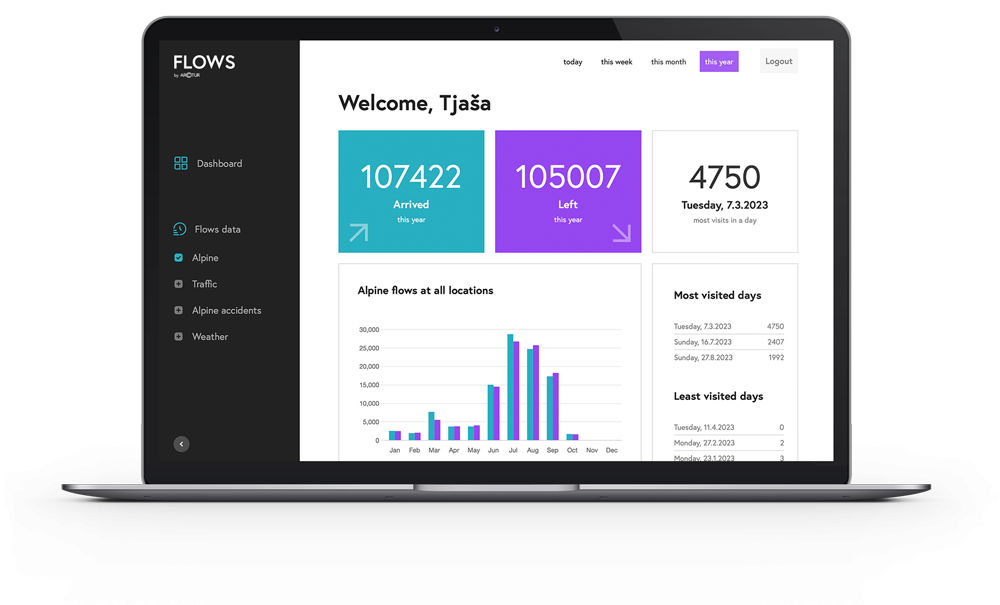
Mountaineering 4.0 brings innovative technologies to the Alpine environment. In partnership with the Alpine Association of Slovenia, CIPRA Slovenia and Alpine Club Tržič, Arctur and Tourism 4.0 partners set up a system of 30 footfall sensors at five destinations - Vršič, Lovrenška jezera, Storžič, Osp and Kum – along popular hiking trails. The footfall monitoring system collects data in real-time and displays the data on the user-friendly FLOWS dashboard, allowing stakeholders to better understand visitor patterns in the Alpine area, and thus support the sustainable rerouting of Alpine flows.
The collected data shows for the first time the actual visitor patterns in the Slovenian mountains in real-time. The data on visits to selected hiking trails will also be included in the maPZS application and combined with other relevant and available data, such as weather, traffic, and mountain accidents.
FLOWS Visitors
From Visitor Counting to Destination Intelligence
Destinations need more than visitor numbers. To manage tourism effectively, they need to understand who is visiting, when they arrive, where they come from and what they are looking for. Yet visitor data is often fragmented across spreadsheets, ticketing systems and manual records, making destination-wide analysis difficult.
FLOWS Visitors turns everyday visitor interactions into structured, comparable and actionable data.
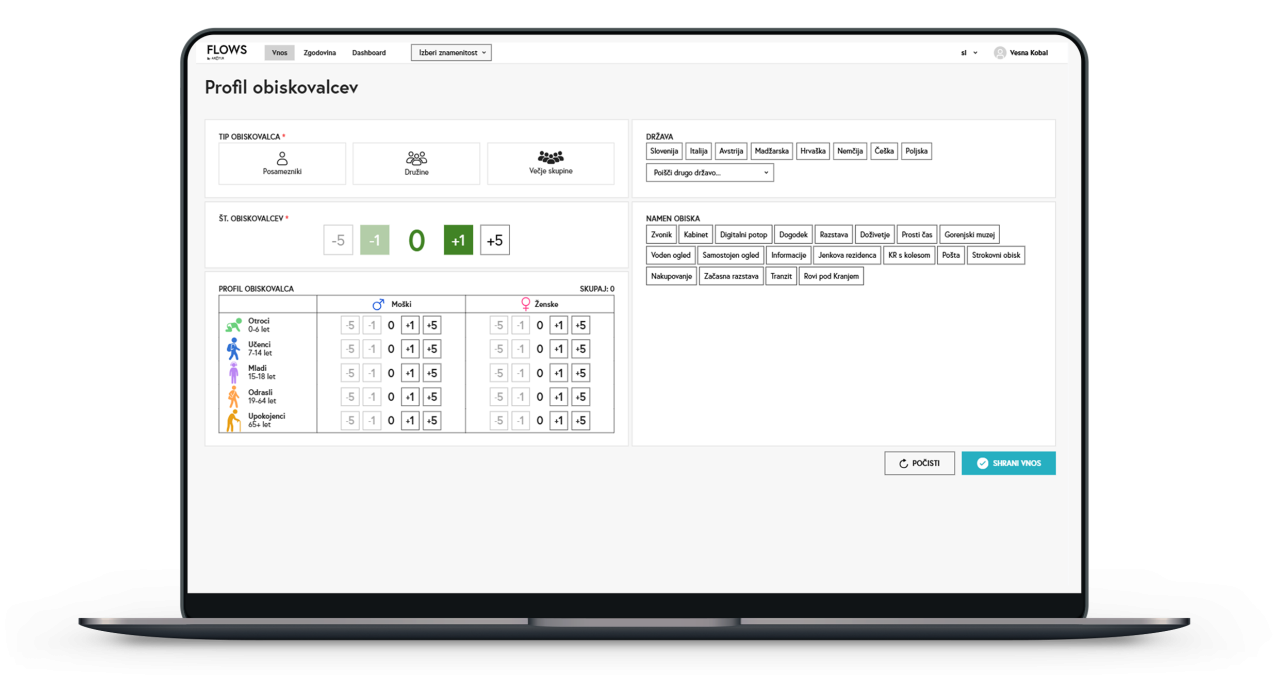
The lightweight web application can be used at tourism information centres, museums, attractions and other visitor points. With just a few taps, staff can record visitor numbers, country of origin, visitor type, purpose of visit or type of enquiry, while time and location can be captured automatically.
Its key advantage is data harmonisation across the destination. Different locations can use forms adapted to their needs while sharing a common data model. This makes it possible to compare visitor patterns, identify peak periods, understand key source markets and better recognise visitor needs.
Data collection can also adapt to busy periods, with essential information captured quickly and more detailed profiles added when needed.
Within the FLOWS ecosystem, these data can be combined with other destination data sources and visualised through shared dashboards.
The result: a shift from simple visitor counting to continuous destination intelligence for better planning, services and visitor management.
FLOWS AI: forecasting tourism demand
What if a destination could predict changes in tourism demand in advance and prepare for them effectively?
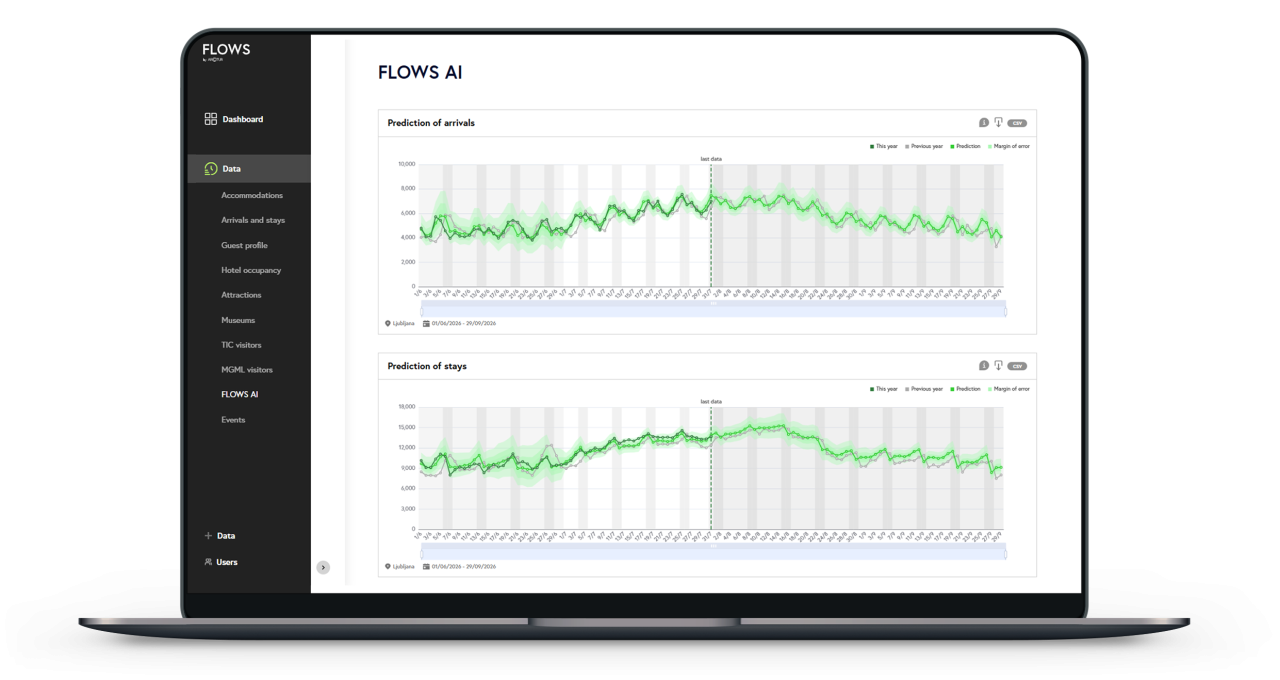
FLOWS AI enables the forecasting of tourist demand up to 60 days in advance. The model combines historical data on tourist arrivals and overnight stays with factors influencing visitor numbers, such as public holidays and school holidays in key source markets, as well as major events at the destination.
Forecasts are available to FLOWS users in interactive charts, and the data and forecasts are automatically updated every month.Destination organisations can thus identify periods of increased or decreased demand in good time and plan tourism capacity, available resources, marketing activities and the management of tourist flows more effectively.
This enables better coordination among stakeholders, timely adaptation of the offering, more effective targeting of promotional activities, and more balanced development and management of the destination.
FLOWS AI transforms data on past tourist visits into useful forecasts for data-driven destination planning and management.